A new way of looking at logistics in the HVAC sector
The transition towards a more sustainable industry does not depend solely on the energy efficiency of heat pumps. It also encompasses the entire product lifecycle, including key aspects such as logistics, materials and waste management.
At Efitherma, we believe that sustainability should be an integral part of every stage of the process. That is why we have developed our Sustainability and Circular Packaging Plan, an initiative designed to reduce our environmental impact through the return, reuse and recycling of packaging materials.
This programme is designed to meet the increasingly stringent environmental requirements of the European market.
Index
An invisible problem: packaging waste
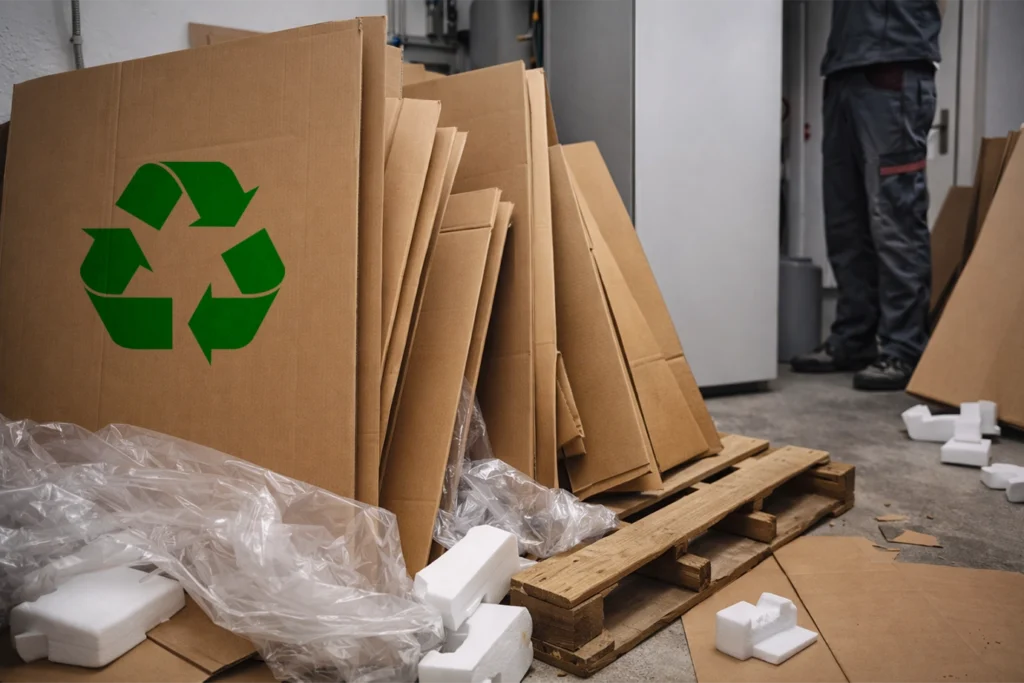
Every heat pump delivered to a construction site generates a considerable amount of packaging materials, including:
Cardboard
Plastics
Internal protections
Wooden pallets
In large-scale projects, such as construction works, these materials can generate significant volumes of waste, with a direct impact on several key areas:
Waste management costs
Installation time
Organisation of the project
The project’s environmental footprint
Furthermore, an increasing number of projects are required to meet international sustainability standards such as BREEAM or LEED, where waste management and material traceability are becoming key criteria. This has led the sector to rethink the traditional packaging model.
All packaging on the European market must be recyclable or reusable by 2030.
Targets have been set to reduce packaging waste by 5% by 2030, 10% by 2035 and 15% by 2040.
The packaging design must facilitate recycling, reuse and a reduction in materials.
This is prompting many companies to develop reusable packaging and reverse logistics systems, which is why Extended Producer Responsibility (EPR) is becoming increasingly prevalent in the industry.
This approach means that manufacturers are no longer solely responsible for the product they sell, but also for aspects relating to its logistics cycle, such as: the packaging used, its recyclability and even its recovery after use.
Benefits of implementing circular recycling in the HVAC sector
In this market, energy efficiency is now taken for granted, prices are becoming increasingly competitive in the entry-level segments, and manufacturers are distinguishing themselves through added value.
El embalaje circular aporta precisamente ese valor diferencial. Entre sus principales beneficios destacan:
Reducing waste on site
Fewer disposable materials means less waste management, lower costs and a tidier workplace.
Added value in sustainable projects
Particularly in projects that require environmental certifications.
Improved logistics traceability
It enables you to monitor the entire lifecycle of the materials used in transport.
Differentiation from low-cost solutions
Many low-cost devices still use packaging that is entirely disposable and harmful to the environment.
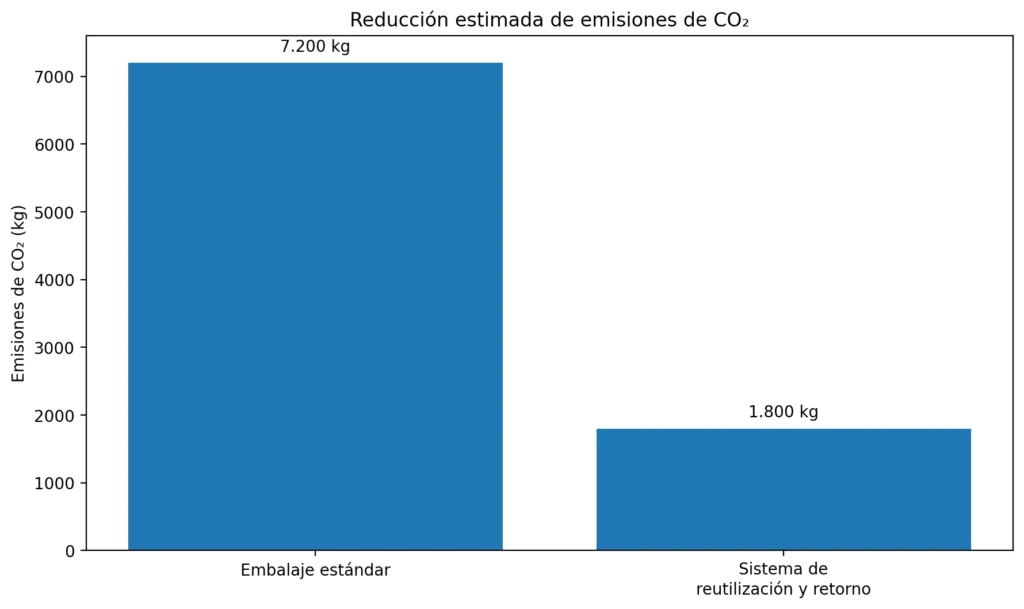
Actual reduction in CO₂ emissions
The estimated emissions savings amount to approximately 5,400 kg of CO₂, which reinforces Efitherma’s sustainability credentials as it rolls out its circular packaging scheme and aligns with the environmental expectations of the European market.
One of the main benefits is the reduction in emissions associated with the production of new packaging materials. Thanks to the return and reuse system, there is no need to manufacture a significant proportion of the pallets and packaging required for each shipment.
Grants and support schemes
In addition to European regulations, many countries have national schemes offering tangible incentives. Here are a few examples:
France
It offers financial incentives for the use of recycled plastics in packaging, with subsidies of up to €1,000 per tonne in certain cases.
The Netherlands and the Nordic countries
They are developing advanced systems for:
Returnable containers
Return deposits
Reverse logistics
Germany and other countries
There are producer responsibility schemes such as:
Green Dot (Der Grüne Punkt)
Container return schemes
Efitherma’s circular packaging plan
With the aim of applying these circular economy principles, Efitherma has developed a structured system for the return, reuse and recycling of packagingmaterials for equipment destined for the international market.
The programme initially includes:
A minimum order of equipment (quantity agreed with the customer)
Aimed primarily at the European market
Reuse of cardboard and wooden pallets
Recycling of plastic materials in the country of destination
Unlike the traditional ‘use and throw away’ model, this system combines the reuse of materials with responsible recycling, significantly reducing the environmental impact associated with the transport of equipment.
How does Efitherma’s circular packaging scheme work?
The system is designed to be simple, transparent and efficient for customers.
1. Return and reuse service
Efitherma offers a dedicated service for the return of wooden pallets and cardboard packaging associated with the units supplied.
These materials can be returned to our premises for reuse in future shipments.
2. Refundable service charge
To help cover the costs of running the system, a small fee is charged per item, which is refunded in full when the materials are returned in good condition.
Therefore:
The customer does not incur any actual additional cost
We encourage the return of materials
The sustainability of the process is guaranteed
3. Return policy
Returned items must:
Be complete
Encontrarse secos
Be in good condition
Returns logistics are arranged in advance with Efitherma or its logistics partner, and refunds may be issued either as a credit against future invoices or as a direct payment, as agreed.
By their very nature, plastic materials are managed through local recycling by specialist companies.
The role of the installer: a key player
In a circular packaging system, the installer plays a key role because they are the ones who interact directly with the packaging when the equipment arrives on site. Without their cooperation, the system could not function, as the materials would be left scattered around the site and would ultimately be treated as conventional waste.
Furthermore, the installer is the person most familiar with the dynamics of the site and can organise the packaging efficiently after installation, making it easier to collect or return it in accordance with the agreed logistics.